
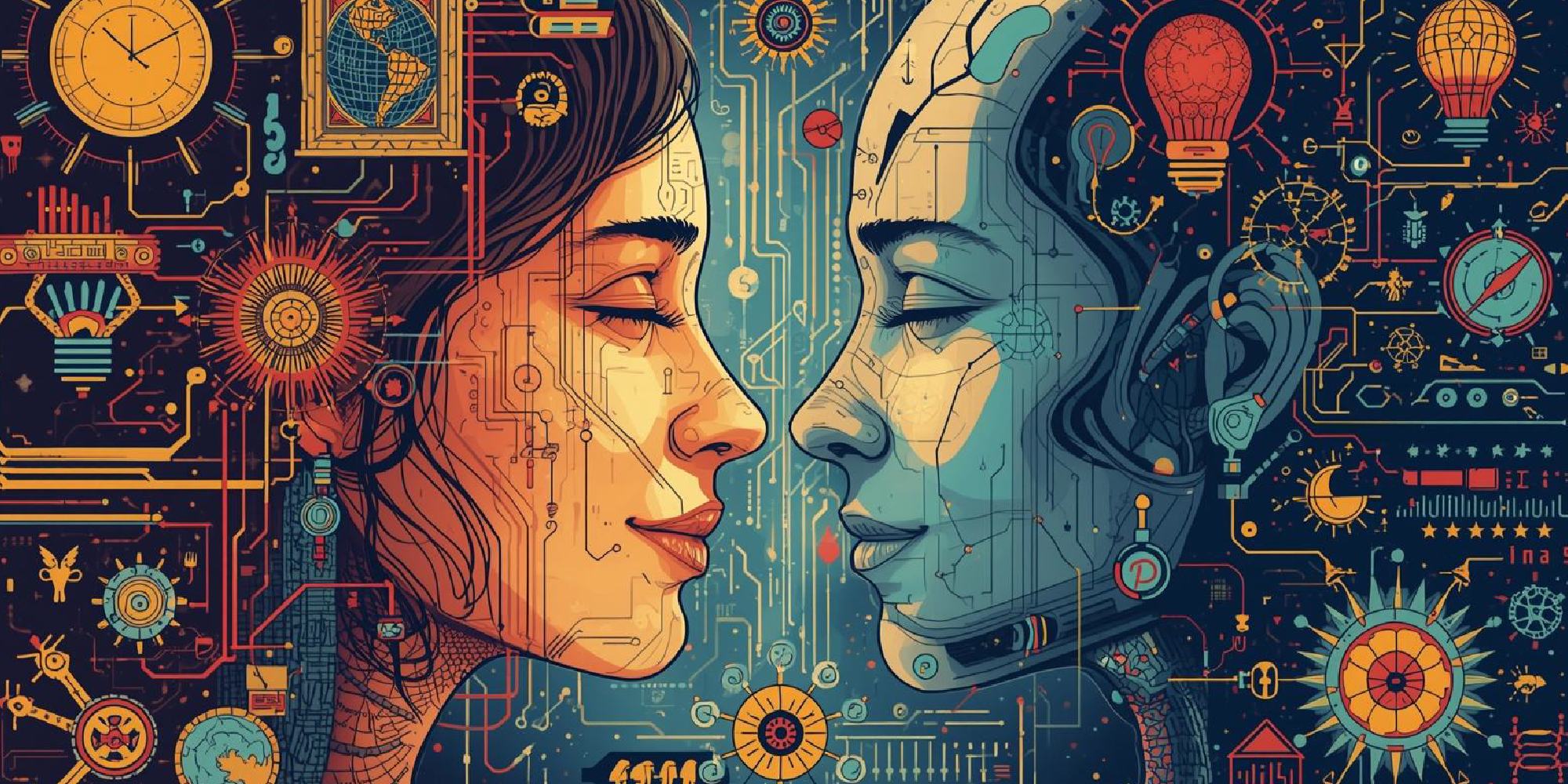
Balancing technology with human connection in leadership
A few weeks ago, I tried asking my AI assistant to “check in with my team.”
It promptly replied: “Sure. Sending automated motivational quotes daily.”
Close… but no coffee.
Because empathy can’t be scheduled at 9 a.m. or downloaded as an update.
We’re in a world where AI can write emails faster than you can think, summarize meetings you didn’t attend, and even “analyze” how engaged your team is — but it still can’t tell when someone’s just pretending to be fine on a video call.
In this article, you will read about,
The Irony of Progress
I remember a colleague joking that his new manager seemed “AI-powered.”
He was efficient, data-driven, and lightning-fast on Slack — except, he never once noticed that his team was running on fumes.
We have all met that kind of leader. The one who nails analytics but misses anxieties.
Who checks deliverables but not dwell time — on the face of a tired team member.
Technology may have given us dashboards for everything, but when it comes to human connection, the metrics still fail us.
This World Mental Health Day, maybe the real reboot we need is in our emotional software.
The New Leadership Operating System: EQ²
In the Age of AI, intelligence is abundant. What’s scarce is empathy — and that’s what I call the Empathy Quotient (EQ²).
It’s not just about being “nice” or having open-door policies. It’s about seeing and sensing what the data doesn’t tell you.
Empathic Awareness – Noticing that the usually chirpy team member is unusually quiet.
Empathic Action – Following up with a simple, “Hey, you seemed off today. Want to talk?”
Empathic Design – Building workflows and systems that honour humans, not exhaust them.
It sounds simple, but in a world obsessed with automation, slowing down to connect takes courage.
When Bots Outperform Humans (Almost)
A friend once told me his AI assistant wished him a happy birthday before his boss did.
He laughed, but there was a truth hiding in that punchline.
Somewhere, leadership got so transactional that technology is now filling emotional gaps. AI remembers our birthdays, anniversaries, even our “wellness check-ins.” But that’s just memory without meaning.
An AI can tell you what happened.
A leader with empathy understands why it happened — and what to do about it.
The Human Upgrade
The future will belong to leaders who know how to balance IQ, EQ, and AI.
Because while machines can process emotions, only humans can feel them.
AI can help detect burnout trends, but it takes a leader with empathy to say, “Take the afternoon off, I’ve got your back.”
It’s not about rejecting technology — it’s about reclaiming humanity. It’s using data to listen deeper, not louder.
So as we mark World Mental Health Day, maybe the most radical thing a leader can do is this:
- Close the laptop.
- Step into a real conversation.
- And listen — not for output, but for emotion.
Empathy is not the opposite of efficiency. It’s the engine that makes performance sustainable.
Because in the end, no algorithm ever changed someone’s life — but an empathetic leader, who paused, listened, and cared — often did.
Here’s the recap of our leadership evolution so far:
- Article 1 (No Permission Needed): You don’t need a title (or a nod) to start leading.
- Article 2 (Lost & Found): Curiosity is your secret weapon in a tech-heavy world.
- Article 3 (The Courage to Grow): Real leadership means stepping into the unknown—with courage, not a GPS.
- Article 4 Stillness in Motion: The Inner Work of Leadership
- Article 5 Sustainable Leadership: Growing Without Leaving a Footprint
- Article 6 Failing Forward: The Hidden Power of Setbacks
- Article 7 Freedom to Lead: Owning Your Voice at Work
- Article 8 The Invisible Advantage: Cultivating Influence Without Authority




