Featuring:
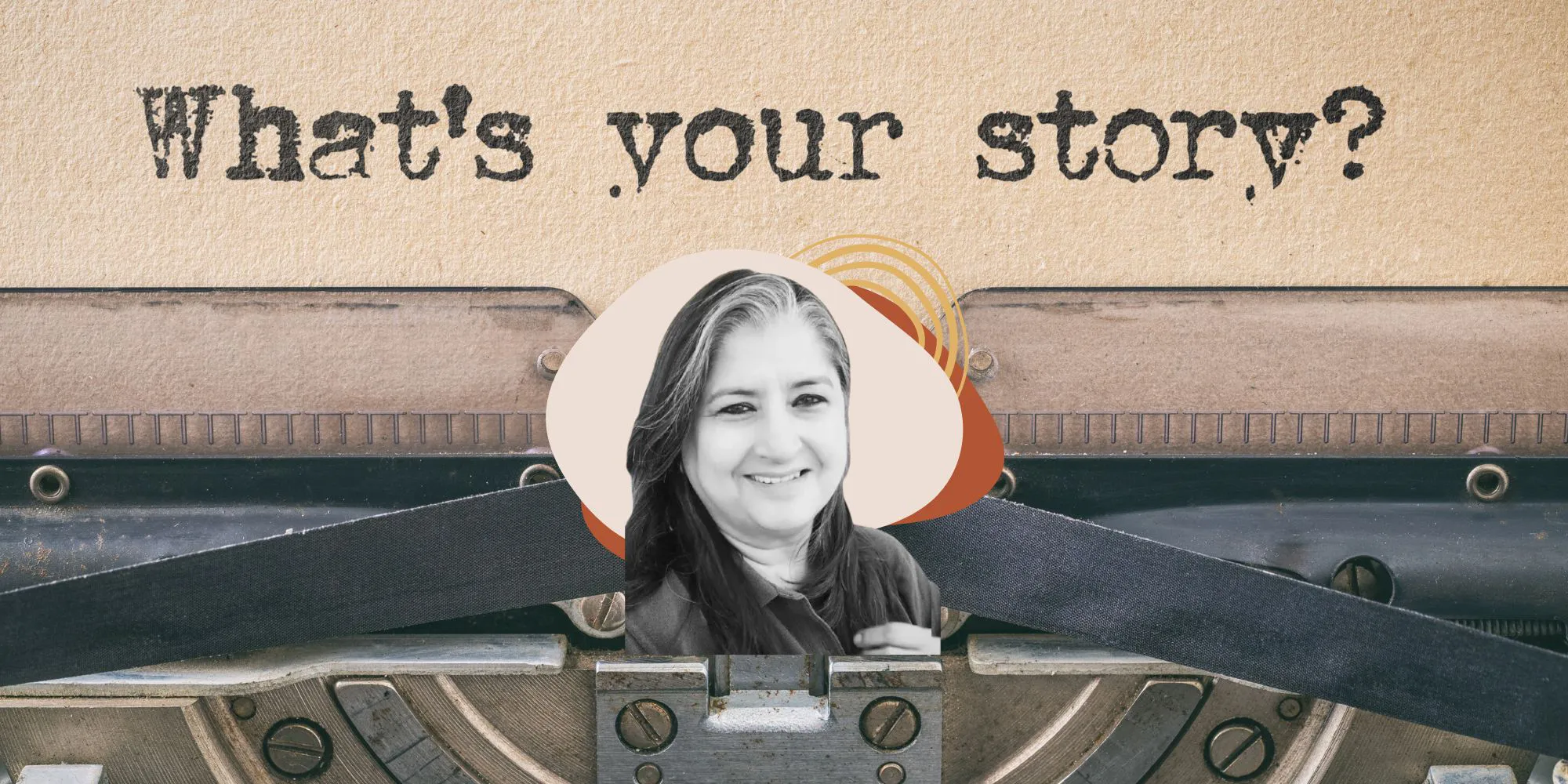
Smita Bharti, Executive Director – Sakshi
Interviewed By: Sripriyaa Venkataraman
Curated By: Chandrani Datta
Ahead of her storytelling workshop with the Global Coaching Lab, storytelling expert Smita Bharti shares how anchoring your personal story and bridging the gap between perception and reality can create powerful, shared narratives. In this interview, she explains how authentic storytelling builds trust, fosters connection, and drives collective vision—whether in leadership, business, or personal life.
What inspired you to dive into storytelling and make it such a central part of your journey?
I’ve always been an avid reader, immersing myself in a world of stories from a young age. In many ways, the stories I read—and imagined—were better than the reality I lived. Early on, I realized something profound: I was the sum of the stories I told myself and others. And this wasn’t an adult realization—it was something I felt even as a child.
As I grew, I began to see that the stories I believed had the power to reshape my lived reality. I shifted from feeling helpless and invisible, stuck in a cycle of powerlessness, to creating a world where I felt enabled, heard, and valued. This transformation wasn’t easy—it was shaped by living through the pain and trauma of gender-based violence. But by changing the narrative I told myself; I started believing in my own strength—and others began to believe in me too.
That’s how I created the life I live today, and it’s the same strength I now share with others. Whether it’s helping survivors of gender-based violence reclaim their voice or guiding individuals to embrace their vulnerability and power, storytelling is my way of helping people rewrite their own realities.
For me, storytelling isn’t just a cognitive belief—it’s deeply rooted in my personal journey of transformation. It’s what drives me to take this power to wider audiences, across different spaces and spheres, to inspire change and possibility in others.
You’ve worked with a diverse range of organizations—from social impact groups to global entities like the UN and even corporate settings. Given the growing popularity of storytelling workshops and initiatives, what do you see as some of the key gaps in the way storytelling is approached today?
Intrinsically, we are all storytellers. As I mentioned earlier, we are the stories we tell ourselves. We live those stories, shaping our understanding of the world, our relationships, and our past and future through the narratives we create.
Our identity is essentially a mosaic of these stories—those we tell ourselves and those others tell about us. However, I’ve observed a critical gap: the story we live and the story we tell often don’t align.
Most of the story stays inside us. What gets communicated is merely the endpoint—the tip of the iceberg. As a result, others don’t get to see, feel, or understand the journey, the struggles, or the experiences that shaped us. Without that depth, authentic connections become difficult, if not impossible.
This gap leads to dissonance—a disconnect between intention and impact. It causes breakdowns in communication, a lack of genuine connection, and ultimately, disinvestment.
At the same time, it’s not always about unwillingness to share. Stories often go untold because of hesitation or fear. We may feel vulnerable about opening up, uncertain about how to craft or articulate our journey, or unsure of how much to share and when. And there’s always the question: Will this story be met with empathy or judgment?
These concerns, while valid, often lead to a lack of storytelling altogether. And when that happens, the result is always the same—a breakdown in connection and understanding. It’s this gap that we need to bridge to foster meaningful relationships and authentic communication.
I’m sure you’ve carefully planned how the three days of this workshop will unfold. How do you intend to structure the time with the audience?
What’s most important is first anchoring our personal story—our brand story. For example, my own story is deeply rooted in my lived experience: 30 years of navigating and resolving the challenges of gender-based violence, both for myself and for others. It’s simple, honest, vulnerable, and transparent.
Now, your story doesn’t need to be as intense or deeply personal; it’s about finding the level of vulnerability and transparency you feel comfortable with. What matters is crafting a personal story that feels authentic to you, one that you can live by and connect with.
Once we’ve anchored our personal story, the next step is bridging the gap between how we see ourselves and how others perceive us. When these two narratives—the one we believe and the one others see—come together, they form a shared story. This shared story becomes the foundation for genuine connection, whether it’s with your team, family, friends, or community.
When these stories align, they create investment—investment in yourself and in others. You stop shying away from perceived weaknesses or vulnerabilities and instead embrace them as part of your narrative. This fosters mutual investment: you in others, others in you, and collectively, in a shared vision.
From there, we can craft a larger story—whether it’s a business story, a brand story, an organizational story, or even a family story. This becomes a story we can all anchor ourselves to, one we can be proud of. It’s no longer about my vision or your vision—it’s our vision, born from shared narratives that unite us and drive us toward a common goal.
People enter the new year with goals and resolutions, but they’re often short-lived. How can this approach help them sustain their momentum and perhaps open up a new dimension of who they are as they step into the year ahead?
Absolutely, Priya. What we’re focusing on here isn’t just the softer aspect of storytelling or abstract ideas. This workshop will provide a structured approach with clear steps, tangible skills, and practical tools to help participants craft and refine their personal narratives. It’s about breaking the process down into small, achievable milestones so no one feels lost at sea.
The stories we work on during the workshop won’t just be for these three days; they’ll be tools participants can carry into other aspects of their lives—personally and professionally—well beyond the program. It’s about creating something meaningful, refining it, and leaving with a narrative that feels polished, powerful, and authentic.
And yes, since this workshop is virtual, we’re excited to bring together a diverse group of participants across geographies. Because, as I’ve often said, we are all storytellers. Regardless of what we do or where we live, stories are how we make sense of the world—and of ourselves.
This workshop is an opportunity to craft, articulate, and share those narratives effectively. It’s about recognizing that every story has the power to inspire change. Far too often, we let the voice of self-doubt creep in—’My story isn’t strong enough,’ or ‘Who would want to hear this?’ But here’s the truth: every story matters, and every story can inspire. The courage to say ‘Why not?’ is the first step to unlocking that power.
As a playwright and theater director, I’ve spent years crafting immersive stories—stories of characters I fall in love with, who face challenges, conflicts, and desires. These characters are relatable because they speak the language of emotional truth. As an audience, we walk with them, feel with them, and ultimately root for them to win.
That’s the strength and skill I bring to this workshop: the ability to guide participants in transforming their real-life journeys into compelling narratives. We’ll work together to uncover their stories, refine them, and equip them with tools to share those narratives authentically—stories that inspire, connect, and build trust. Because when we own our stories, we don’t just speak; we move people.
Smita, who do you think this workshop is best suited for? Is there a specific type of person who should attend, or do you envision it being a diverse, mixed audience across geographies, professions, and walks of life?
I’m really hoping for a diverse, mixed audience—people from different geographies, professions, and career stages. That’s what will make this experience truly exciting. Everyone brings their unique perspective and voice, which will create a rich, dynamic environment. It’s this diversity that will make the workshop deeply engaging and enriching for all of us.
Key Learnings:
- “Our identity is essentially a mosaic of these stories—those we tell ourselves and those others tell about us. However, I’ve observed a critical gap: the story we live and the story we tell often don’t align.”
- “True connection begins when the story we tell ourselves aligns with the story others see—creating a shared narrative that bridges perception and reality.”
- “Every story matters, and every story can inspire. The courage to say ‘Why not?’ is the first step to unlocking that power.”

Smita Bharti
Executive Director – Sakshi
Smita Bharti is the Executive Director of Sakshi, a rights-based NGO, and Programme Director of The Rakshin Project, a youth-led movement across 40,000 colleges in India to combat child sexual abuse. An award-winning playwright, poet, and theatre practitioner, Smita uses storytelling and theatre as transformative tools for social change, restorative justice, and emotional competency building.
With decades of experience as a facilitator, she has worked with diverse groups, including the judiciary, corporates, grassroots communities, and survivors of violence. A Rotary Global Peace Fellow and recipient of the Karmaveer Gold Chakra, Smita blends her expertise in performance art and activism to create immersive experiences that promote diversity, inclusion, and everyday equality.