
RitualsOfLeadership
(Across the world, festival rituals — whether it’s a Japanese tea ceremony, Diwali oil bath, or the quiet of Sabbath — remind us that identity isn’t built in moments of achievement but in moments of grounding. This series explores how personal and cultural rituals strengthen leaders by anchoring them in who they are, before they rush into what they do.)
On a crisp autumn morning in Kyoto, a woman kneels before a low table, her movements unhurried. She folds the cloth once, twice, before wiping the edge of a ceramic tea bowl. Steam curls gently from the kettle; silence hums in the background. To an outsider, the Japanese tea ceremony might appear ceremonial to the point of stillness. But to those who practice it, each deliberate gesture is a meditation on presence — a reminder that grace begins where speed ends.
In an age where leadership is measured in output and agility, such moments can feel like luxuries. Yet, across continents and centuries, festivals and rituals have offered communities exactly this — a pause to remember that we are human before we are productive.
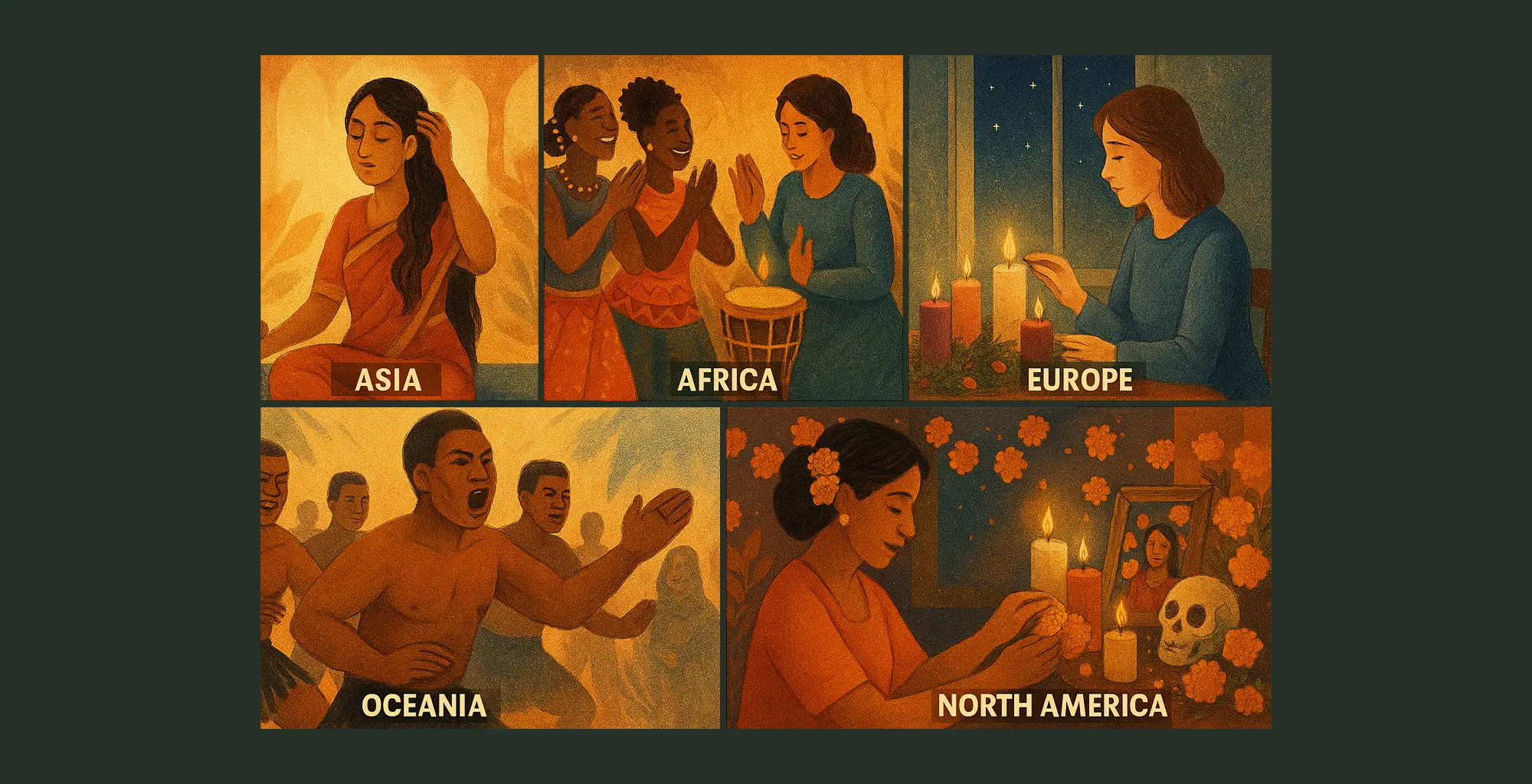
We explore some integral rituals across 5 continents to see how they teach us different ways of taking the pause in leadership.
In this article, you will read about,
Asia: The Oil Bath of Renewal
Across India, Diwali is often celebrated as a festival of light, prosperity, and reunion. But before the lamps are lit and sweets are shared, the day begins in darkness — with an ancient act of cleansing known as abhyanga snan, the ritual oil bath.
Before dawn, warm sesame oil is applied from head to toe, followed by a slow bath infused with herbs. Homes are scrubbed clean, wardrobes reorganized, and spaces refreshed. For many, this is not vanity but symbolic purification — a ritual that clears both the home and the heart.
The oil bath, still practiced in many families, carries deeper meaning. It is not merely hygiene; it is humility — a way to wash away fatigue, ego, and old intentions before stepping into the light of a new year. In a culture where productivity is often celebrated over pause, this mindful preparation can feel almost radical.
As Mahatma Gandhi once said, “There is more to life than increasing its speed.”
For leaders, this ritual offers a metaphor worth reclaiming. Renewal begins not in activity, but in reflection — not in performance reviews, but in pauses that ask:
What am I ready to release before I begin again?
Perhaps leadership, like Diwali itself, shines brightest after the cleansing — when we’ve taken a moment to slow down, let go, and step into light with intention.

Africa: Ubuntu in Celebration
In Southern Africa, communal festivals — from harvest gatherings to weddings — often express the spirit of Ubuntu: I am because we are. The dancing, drumming, and shared meals are not entertainment; they are social glue.
Leadership, at its heart, is also relational. A leader disconnected from community loses perspective. The Ubuntu principle reminds us that identity doesn’t form in isolation — it forms in interaction.
Nelson Mandela once said, “If you want the cooperation of humans around you, you must make them feel they are important — and you do that by being genuine and humble.”
What rituals — in the office, at home, or within teams — help you reaffirm that connection?
North America: Remembering the Dead to Value the Living
In Mexico, Día de Muertos — the Day of the Dead — transforms grief into gratitude. Families build altars, decorate them with marigolds, photographs, and favourite foods of loved ones. They don’t mourn; they converse with memory.
The ritual reframes loss as continuity — a vital leadership lens in times of change. To lead well is to honour what came before, not to erase it. The ofrenda (altar) says: “You belong because you remember.”
How might leaders, instead of rushing past endings — projects, roles, seasons — pause to acknowledge what they’ve learned, who helped them, and what deserves gratitude?
Oceania: The Haka and Collective Energy
Across the Pacific, the Māori haka — a rhythmic chant and dance — is often seen as a war cry before a rugby match. But its deeper purpose is unity. Every stomp and shout channels individual energy into collective purpose.
In organizations, we often begin meetings with slides and KPIs. Imagine beginning with presence. The haka teaches that embodiment — the act of showing up fully — creates shared momentum.
Could our workplaces feel different if leaders helped teams center before they perform?
Europe: The Stillness of Advent
Amidst Europe’s winter bustle, one quiet moment endures — the Christmas Eve vigil. In much of Europe, December brings the Advent season — four quiet weeks before Christmas. Long before the commercial rush, families once gathered around candles, one lit each Sunday, symbolizing hope, peace, joy, and love.
The essence wasn’t the feast but the togetherness in waiting — the discipline of not filling every silence. The ritual wasn’t about counting down; it was about slowing down. Each candle invited reflection on how to embody those values. In leadership terms, Advent is a masterclass in anticipation — the art of preparing inwardly before outward action.
For leaders constantly surrounded by noise — notifications, opinions, deadlines — this practice offers a lesson in restraint. Silence can be the most generous form of attention.
The practice invites another question:
How often do you prepare yourself — not just your calendar — for what you want to create?
A Global Lesson in Grounding
From the stillness of a tea ceremony to the thunder of a haka, rituals across continents teach one truth: presence is not passive. It’s active attention — the discipline of showing up, wholly, in the moment you’re in.
These practices, ancient yet timeless, reveal a paradox: we think grounding requires time, but it really requires intention. You can feel grounded in two minutes of silence as much as in a two-hour ritual — if you’re fully there.
Festivals make that intention visible. They give form to what we often forget — that celebration is not escape from life but immersion in it.
Questions Worth Sitting With
- What rituals in your culture help you pause and reset?
- How often do you truly prepare yourself — not just for work, but for being you?
- When was the last time you practiced stillness before taking action?
- Which community traditions could remind your team of connection and gratitude?
The Leadership of Stillness
In a world that prizes speed, the leader who pauses becomes a rare sight — and often, the most effective one. Because grounded leaders draw strength from stillness, not motion.
The Japanese tea master Sen no Rikyū once said, “Tea is nothing more than boiling water, making tea, and drinking it.” Yet for centuries, that simplicity has centered millions.
Perhaps leadership, too, is nothing more than showing up fully — one conversation, one decision, one breath at a time.
“Without tradition, art is a flock of sheep without a shepherd. Without innovation, it is a corpse.”
— Winston Churchill
Churchill’s words, though about art, echo the paradox of modern leadership. To innovate, we must stay anchored. To move forward, we must sometimes stay still.



